
The first time I walked through the Jolimont arcade on a busy Tuesday arvo, I noticed how quickly the noise of a single jackpot could pull a whole crowd toward one screen. That same availability bias makes vivid wins feel more common than they are, and it is exactly why I judge new gaming software providers by their underlying controls rather than the flash on the lobby page. I have spent years managing country operations for Unibet and building performance channels down under, so I tend to look past the promotional spin and ask whether the product behaves properly when a player actually tries to cash out. Anyone comparing gaming software providers new to the market should start there, because the real test is never the welcome screen.
What the Operator Is Actually Selling

A fresh provider usually arrives with a polished demo reel, but the commercial story matters more than the artwork. In my experience, the strongest entrants position themselves around a tight slot library and a few table variants rather than pretending to cover every category at once. They tend to lean on a couple of established studio partnerships for the core maths models, then layer on their own bonus mechanics and cashier logic to differentiate. I have seen plenty of launches that look impressive until you check the payment rail, the registration friction, and the way the loyalty loop actually rewards repeat play instead of just hooking a new sign-up. The operators that survive the first twelve months are usually the ones that treat the cashier and the support desk as the product, not the lobby.
When I am assessing gaming software providers new to the Australian market, I look for a positioning statement that matches the actual game count and the payment mix. A provider that claims a broad catalogue but only supports a handful of deposit methods is usually stretching the truth. The better ones tell you plainly which studios they white-label, which titles are exclusive, and how the bonus for example mechanics work on the first deposit versus a reload. That kind of clarity is rare, and it is the first signal that the operator is building for retention rather than a quick acquisition spike. I would rather see a smaller, honest library than a sprawling one that falls apart the moment a player asks a simple cashier question.
For a local read on how a fresh provider stacks up, the big bass floats my boat page breaks down the same kind of operator signals I use when I am comparing a new slot studio against an established one. It is a useful reference point because it treats the lobby art as secondary to the cashier behaviour and the support response times, which is exactly the discipline I apply when I am weighing a new entry against a proven operator. The point is not to chase novelty for its own sake, but to confirm that the product can actually hold a player through a normal session and a normal withdrawal.
| Focus area | What a strong new provider shows | What usually signals trouble |
|---|---|---|
| Positioning | Clear studio partners and a defined slot focus | Vague claims about a huge catalogue |
| Bonus mechanics | Transparent first-deposit and reload rules | Opaque wagering that shifts after sign-up |
| Payments | A realistic mix of AUD-friendly methods | Only a single rail with slow confirmation |
| Support | Named channels and a published response window | A single contact form with no follow-up |
| Mobile | A lobby that loads and plays without friction | A demo that breaks on a phone browser |
How Trust and Support Get Tested in Practice
Licensing, security and account controls
A new provider can look polished and still run into trouble if the licensing and security layer is thin. I always check whether the operator holds a recognised licence, whether the site uses proper encryption, and whether the account controls actually let a player set limits without jumping through hoops. That is the kind of infrastructure I used to build out when I was managing country operations for Unibet, because a flashy lobby is useless if the account settings are buried or the verification process is inconsistent. The operators that take this seriously publish their licence details, explain their security approach in plain language, and give players real tools for deposit limits, time-outs and self-exclusion.
High-roller credit and junket operations carry significant default and money-laundering risks, and I have seen new entrants underestimate that exposure when they try to chase big spenders too quickly. A responsible operator will keep the credit and VIP mechanics conservative, document the KYC flow clearly, and make sure the privacy policy actually matches what the cashier and support teams do in practice. I would rather see a modest, well-documented approach than a glossy VIP pitch that falls apart the moment a compliance question comes up. The players who stick around are usually the ones whose accounts are set up correctly from day one, not the ones who get a big welcome bonus and then hit a wall at the withdrawal stage.
Support, responsible play and privacy
Support is where a new provider usually reveals whether it is built for players or for press releases. I look for named contact channels, a published response window, and a team that can actually answer a cashier question without sending you in circles. The operators I respect also treat responsible-play tools as a core feature rather than a footer link, and they make sure the privacy policy is specific about what data they collect and how it is used. I have worked with affiliate channels long enough to know that a slow or vague support desk kills retention faster than a mediocre bonus ever could, because players remember the moment they felt ignored.
Amelia Jackson, Affiliate Partnerships Director, Harbour City Gaming Review, puts it plainly: a new provider only earns a place in an affiliate roster when the support desk can resolve a real player issue in one pass, not three. William Watson, iGaming Regulatory Consultant, Outback Gaming Research, adds that the operators who last are the ones that treat licensing and privacy as the foundation, not as a compliance box to tick after launch. I tend to agree with both of them, because I have seen too many launches that looked strong on paper and then struggled the moment a player needed a real answer about a pending withdrawal or a limit change.
Matching the Product to an Australian Player
An Australian player usually wants a lobby that loads quickly on a phone, a cashier that handles AUD without awkward conversion surprises, and support that answers in plain English rather than in a wall of policy text. I have spent enough time running performance channels in this market to know that the local expectation is practical, not flashy. A new provider earns its place when the registration flow is short, the mobile experience actually works on a phone browser, and the bonus mechanics are written in a way that a regular player can understand before they commit. The operators that miss that mark tend to lose players in the first week, no matter how polished the demo looks.
I have also seen the New Jersey market move fast enough that it quickly rivalled Nevada in sports-betting volume, and that kind of pace is a useful reminder that a new entrant can grow quickly when the product and the payments are right. The difference is that the operators who scale responsibly do not treat speed as a substitute for control. Andrew Evans, Gaming Technology Consultant, Blue Mountains Interactive, notes that the providers who hold their player base are the ones that keep the maths models transparent and the cashier logic consistent, because that is what turns a first deposit into a real relationship. I reckon that is the right lens for any Australian player sizing up a fresh provider, especially if they are comparing a new entry against a longer-established operator.
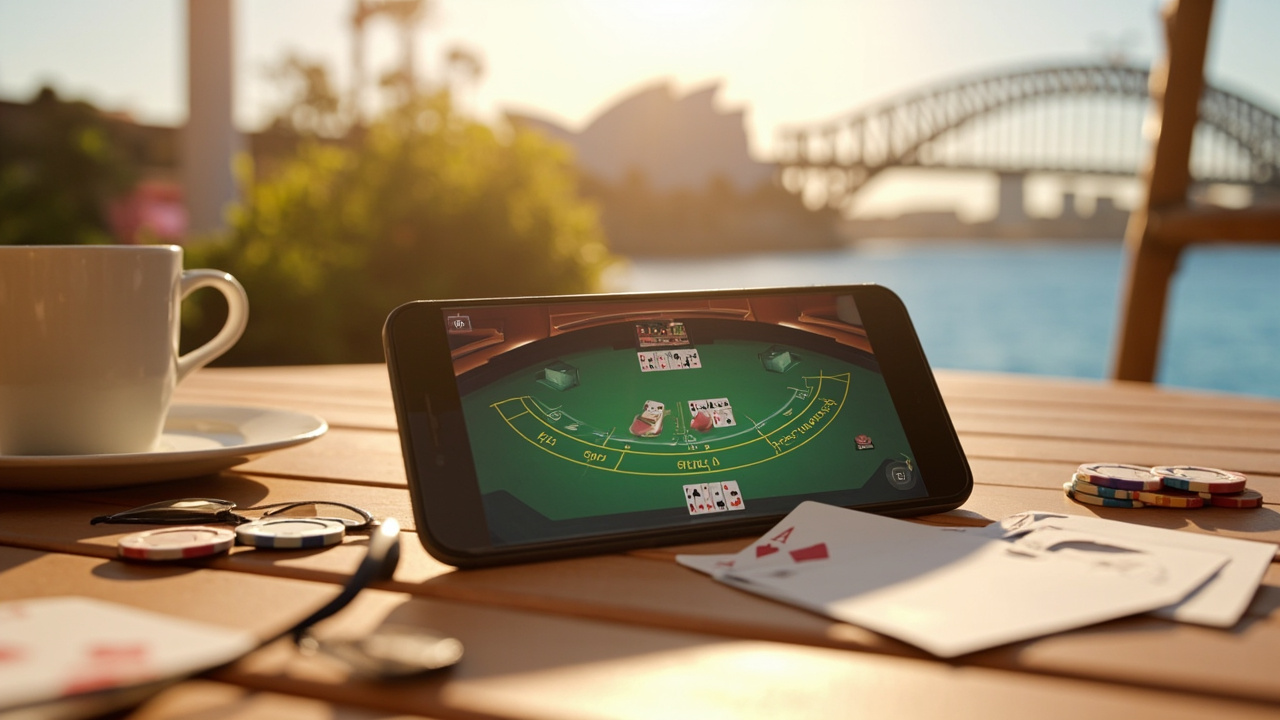
The same Jolimont crowd I watched on that Tuesday arvo is still there, still leaning toward the loudest screen, and that is the image I come back to whenever I am asked whether a new provider is worth a look. The noise will always be there, but the real question is whether the operator behind it has the licensing, the support and the account controls to handle a player properly when the session ends. If it does, the lobby art is almost irrelevant. If it does not, the whole thing is just a very expensive distraction.